Skip to content

Quick answer: Moving into a high-rise in Miami takes coordination with the building. Reserve the service elevator early, ask the building what certificate of insurance it requires and share that with your mover, confirm loading dock access and moving hours, and plan to protect hallways and common areas. Starting these steps early prevents delays.
Miami high-rises and condo towers make moving day a little more complex. You are not just moving boxes. You are sharing elevators, hallways and a loading area with hundreds of neighbors, under rules set by building management or the HOA. The good news: once you know the steps, moving into a high rise is very manageable.
This step-by-step guide covers what to ask, what to reserve and what to prepare.
Step 1: Contact building management as soon as you have a date
Every building has its own rules, and they can differ between your current building and the new one. Call or email management at both buildings and ask:
- Do I need to reserve the service elevator?
- What days and hours are moves allowed?
- Is there a loading dock or a designated moving entrance?
- Is there a maximum time per reservation?
- Does the building require a certificate of insurance from the mover?
- Is there a move-in deposit, application or form to complete?
- Are there size limits for trucks entering the garage or dock?
Write down the answers and the name of the person you spoke with. Ask for the rules in writing if they are available.
Step 2: Reserve the service elevator
The service elevator is the lifeline of a high-rise move. Without a reservation, your crew may wait for passenger elevators between neighbors, and the job can take far longer.
- Book early. End-of-month dates and weekends fill up fast.
- Reserve at both buildings if you are moving from one tower to another.
- Ask for padding. Many buildings install protective pads in the elevator for moves.
- Confirm the time window and plan the move around it.
- Reconfirm a few days before moving day.
Step 3: Request the certificate of insurance (COI) early
Many Miami condo and apartment buildings ask the moving company for a certificate of insurance, often called a COI, before they allow a move. It is a document that shows the mover’s insurance information, and some buildings require that it name the building or association in a specific way.
Here is how to avoid last-minute problems:
- Ask the building exactly what it needs. Request their COI requirements or a sample in writing.
- Share those requirements with your mover right away. Do not wait until the week of the move.
- Confirm the building received and approved it before moving day.
Because requirements vary from building to building, the safest approach is to ask both the building and the mover early. A missing document is one of the most common reasons a high-rise move gets delayed.
Step 4: Plan the loading dock and parking
- Confirm where the truck can park and for how long.
- Ask about height clearance if the dock is inside a garage.
- Find out whether street parking requires coordination.
- Measure the route from the dock to the elevator and from the elevator to your unit.
The distance between the truck and your door has a big impact on time, so share these details when you request a quote.
Step 5: Measure your furniture and doorways
High-rise units often have narrower hallways and doors than houses. Before moving day:
- Measure large pieces: sofas, sectionals, dining tables, bed frames, armoires.
- Measure the elevator interior, doors and hallway corners.
- Plan which pieces need to be disassembled.
Furniture disassembly and assembly can solve most tight-fit problems.
Step 6: Protect common areas
Buildings take common areas seriously, and some charge for damage. A careful move includes:
- Floor protection in lobbies and hallways
- Padding on elevator walls
- Door jamb and corner protection
- Furniture blankets and wrapping on every large piece
- Keeping hallways clear for neighbors
Ask your mover how they protect common areas so you know what to expect.
Step 7: Prepare your unit
- Pack and label boxes by room.
- Keep fragile items clearly marked.
- Set aside valuables and documents to carry yourself.
- Clear a path inside the unit for the crew.
- Have your essentials box ready.
Our Miami moving checklist breaks down the eight weeks before moving day, including building rules.
Step 8: On moving day
- Meet the concierge or building staff and confirm the reservation.
- Show the crew the route and any restricted areas.
- Keep your phone handy for building staff.
- Do a final walkthrough of the old unit before the elevator window ends.
Miami factors to keep in mind
- Rain: Loading docks are often covered, but the street may not be. Keep covers on hand.
- Humidity: Wrap upholstered and wood furniture properly. Read our guide to protecting furniture from Miami humidity.
- Hurricane season: From June through November, buildings may restrict moves when a storm approaches. Keep a backup date.
- Busy areas: In dense neighborhoods like Brickell, traffic and street parking add time, so plan the truck’s arrival carefully.
Apartment and condo moves with Moving Sainz
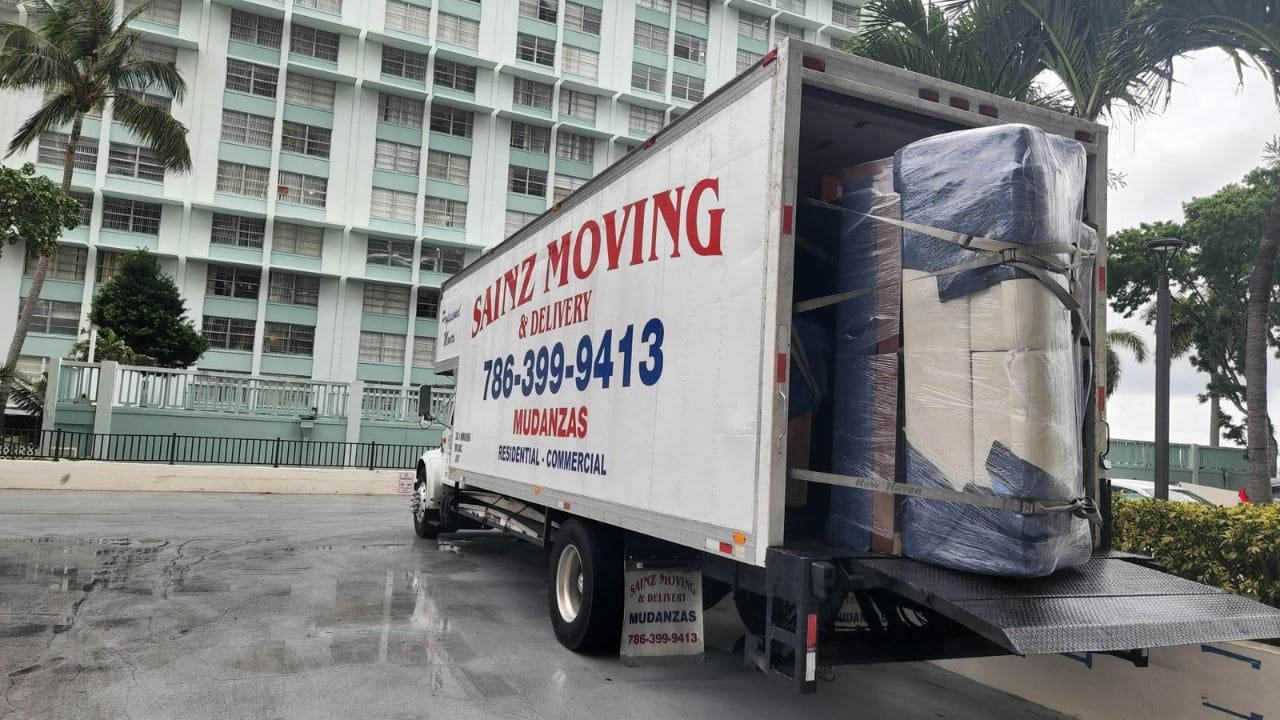
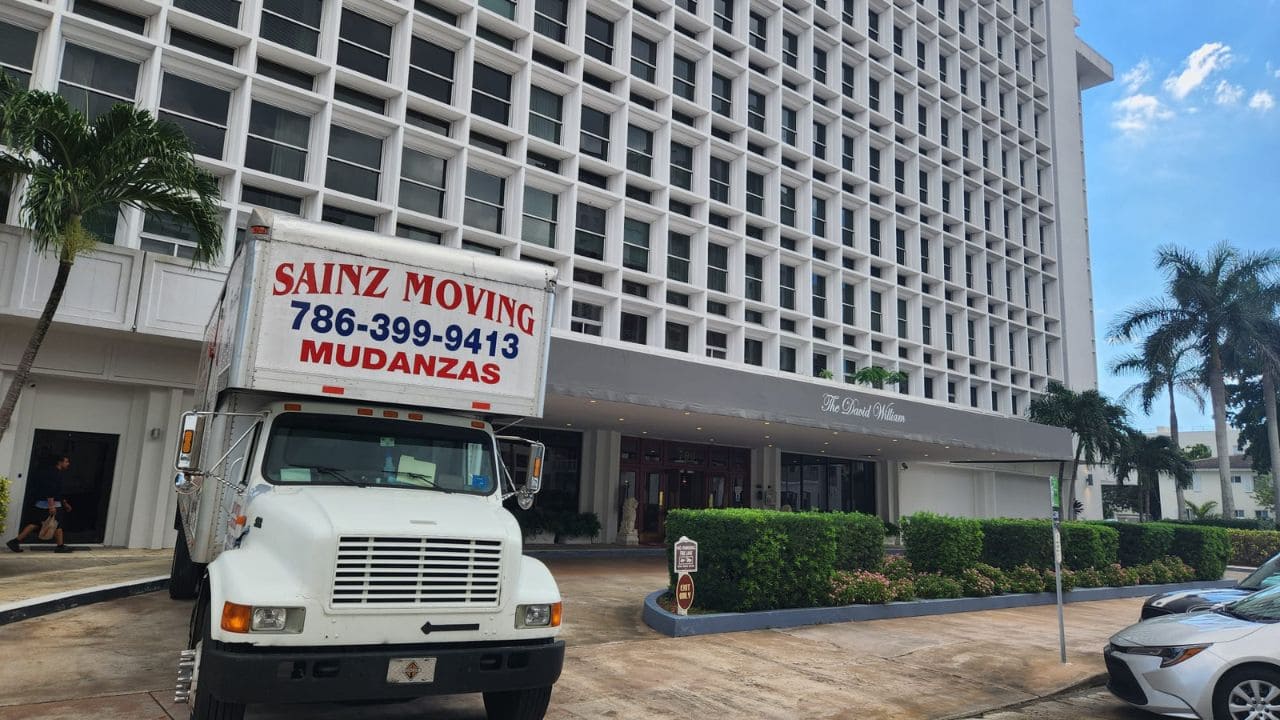
Moving Sainz helps residents move into and out of apartments, condos and high-rises across Miami. Our team handles packing, furniture disassembly and assembly, and careful loading and unloading, with a plan built around your building’s rules. When you call, mention your building’s requirements so they become part of the plan. Learn more about our apartment movers in Miami.
Frequently Asked Questions
How far in advance should I reserve a service elevator?
As soon as you have a moving date. Popular dates, like the end of the month and weekends, book quickly, so reserving early gives you the time window you want.
What is a certificate of insurance for a move?
It is a document showing the moving company’s insurance information. Many buildings require one before allowing a move. Ask the building for its exact requirements and share them with your mover early.
What happens if the building does not receive the COI in time?
The building may not allow the move to start, which can delay or reschedule your moving day. Confirm the document was received and approved a few days ahead.
Do I need to reserve elevators at both buildings?
If both buildings require reservations, yes. Coordinate both time windows so the crew can load and unload without long waits.
Can large furniture fit in a high-rise elevator?
Often, yes, but measure first. Pieces that are too large can usually be disassembled for the move and reassembled in your new unit.
Get a free quote
Moving into a high rise in Miami? Call Moving Sainz at (786) 399-9413 or request your free quote and tell us about your building, so we can plan the move around its rules.